The Dilemma: Philippine Infrastructure at a Crossroads
The Philippine construction industry continues to struggle with several ongoing problems. Even though the government spends billions of pesos each year on infrastructure, many projects still face delays, go over budget, or suffer from poor workmanship. Roads, bridges, flood control systems, public schools, and other important facilities are often completed late, cost more than planned, or fail to adhere to safety and durability standards.
Key challenges include:
- Chronic project delays: Many projects are held up due to poor planning, lack of coordination among agencies, permitting issues, and right-of-way disputes.
- Quality deficiencies: Commission on Audit reports reveal hundreds of projects that are incomplete, defective, or unusable, wasting public funds and disadvantaging underserved communities.
- Limited visibility and liability: Decision-making, changes, and progress are often poorly documented, making it difficult to track performance or hold stakeholders responsible.
- Fragmented workflows: Design, engineering, construction, and operations are often treated as separate silos, resulting in inefficiencies and coordination gaps.
This leads to a cycle where resources are wasted, projects are inefficient, and the public becomes frustrated. As a result, people lose trust in government projects, and important infrastructure is not delivered on time.
This circumstance raises an important question: How can the Philippines end this cycle and ensure that public infrastructure projects reach completion on schedule, within budget, and of high quality?
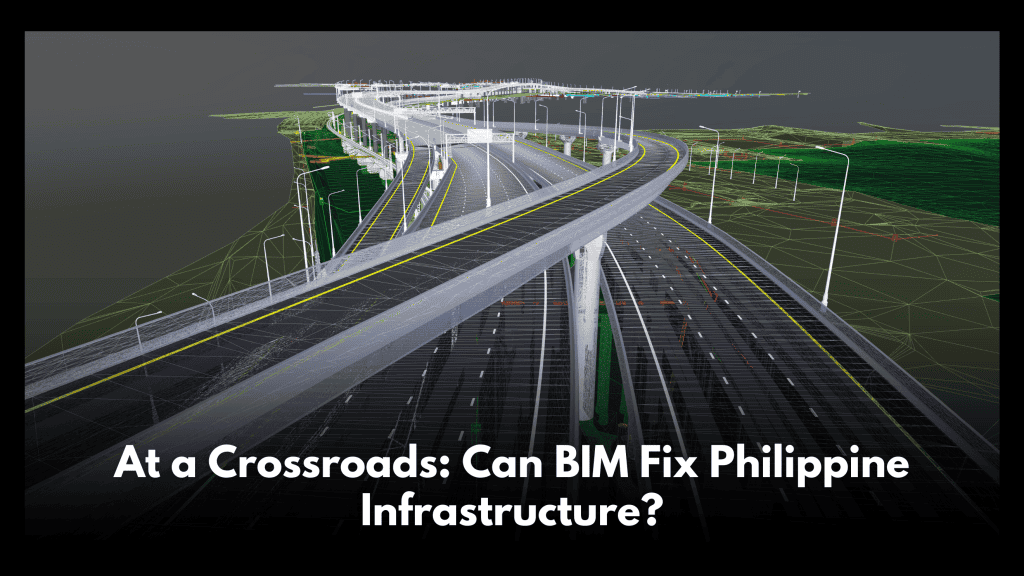
One of the most promising answers lies in adopting systematic, digital approaches to project delivery, with Building Information Modeling (BIM) serving as a fundamental part of the reform, a strategy already proven in countries like Singapore.
Singapore: A Prime Example of Success
Singapore is a leading example of how requiring BIM can change a country’s infrastructure. Since the early 2010s, the Singapore government has made BIM mandatory for major building project approvals. They supported this move with clear standards, step-by-step implementation, industry-wide training, and strong leadership.
The results were significant:
- Improved design coordination and constructability
- Reduced errors, rework, and project delays
- Greater visibility and liability across stakeholders
- More predictable outcomes in terms of time, cost, and quality
Singapore shows that when the government brings together effective policies, clear standards, and digital tools, BIM can be used across the entire industry and improve the quality of project delivery.

How a BIM Mandate Can Transform the Philippines
In the Philippines, BIM is still usually seen as optional. Making it required for public infrastructure projects could help solve ongoing problems by:
- Promoting transparency: Centralized project data allows all stakeholders to track designs, quantities, and schedules in real time.
- Enhancing accountability: Digital records of decisions and revisions make responsibilities traceable.
- Reducing delays and defects: Early identification of clashes and risks limits rework and poor workmanship.
- Strengthening coordination: Designers, engineers, contractors, and government agencies can collaborate from a single source of truth.
Requiring BIM would not just improve how projects are carried out. It would also help build a culture of digital skills, standard practices, and professional responsibility in the Philippine construction industry.
Building a Digitally Enabled Construction Industry
Making BIM mandatory is a move toward using data and systems to better manage projects. With good leadership, clear rules, and skilled workers, this approach can make project workflows more open, efficient, and high-quality from start to finish.
For the Philippines, making BIM a requirement could be a major advancement. It would help ensure projects reach completion on schedule, meet quality standards, and deliver lasting benefits to communities. It would also prepare the construction industry for a digital future.