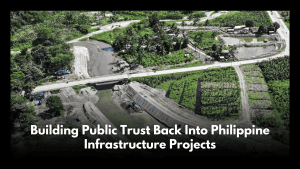
When transparency and coordination are missing, public infrastructure projects in the Philippines often face costly delays and remain unfinished.
The construction sector faces fragmented workflows, inadequate documentation, and insufficient oversight. Addressing these challenges requires a technology-driven approach that leverages Building Information Modeling (BIM) and Integrated Digital Delivery (IDD). These tools offer real-time, centralized project data, promoting collaboration and accountability throughout the project lifecycle.
Why Digital Workflows Matter
Implementing BIM and digital workflows offers several key benefits:
- Better transparency: Everyone involved can track project designs, quantities, schedules, and progress as they happen, helping reduce mistakes and miscommunication.
- Clear accountability: Digital records of decisions, changes, and approvals make it easier to identify responsibilities and assess project performance.
- Early issue detection: Potential design conflicts and construction risks are identified before work begins, minimizing rework, delays, and cost overruns.
- Improved collaboration: Teams work from a single source of truth, ensuring coordination across design, engineering, and construction phases.
Dubai as a Benchmark
Dubai’s government agencies mandate BIM for large-scale infrastructure and real estate projects. This requirement has:
- Streamlined regulatory approvals and project compliance
- Strengthened transparency and accountability across contractors, consultants, and government agencies
- Improved coordination for complex, multi-contractor projects
- Increased predictability in cost, schedule, and quality outcomes
Dubai demonstrates that technology, combined with effective governance and standards, can optimize project delivery in rapidly evolving, high-value urban environments.

Next Steps for the Philippines
For the Philippines, adopting a BIM mandate and integrated digital workflows is not only about improving efficiency. It is also a strategy to restore public trust, reduce waste, and ensure high-quality infrastructure delivery. Transparent processes enable government agencies and contractors to collaborate, monitor progress, and make informed decisions.
By learning from global examples such as Dubai, the Philippines can overcome delays and substandard work, building a future-ready, digitally enabled construction system that benefits citizens, businesses, and government.