Government-Led Push for Sustainable Infrastructure
The Philippine government has started incorporating sustainability within its budgetary and national policy priorities. The Department of Budget and Management (DBM)set aside substantial funds in the 2026 national budget to advance the nation’s commitment to the United Nations Sustainable Development Goals (SDGs). This includes climate action initiatives that directly impact infrastructure, requiring the use of energy-efficient technologies and greener construction techniques.
The Philippines reaffirmed its commitment to bridging urban divides through integrated and sustainable development at the 13th Asia-Pacific Forum on Sustainable Development in February 2026. This aligns with national priorities and international sustainability frameworks, and demonstrates increased government support for environmentally eco-friendly urban planning and construction technologies.
Industry and Organizational Initiatives
Beyond government initiatives, developers and industry associationsare increasingly embracing green building certificationslike LEED (Leadership in Energy and Environmental Design) and BERDE (Building for Ecologically Responsive Design Excellence). In the real estate market, these certifications are increasingly standing out from the competition, particularly in Metro Manila’s rapidly growing urban area.
Climate-resilient infrastructure projectsare also receiving funding from international organizations such as the Asian Development Bank (ADB). To ensure new developments are both modern and environmentally responsible, these projects often require the use of sustainable construction technologies.

Technology Integration for Sustainability
Cutting-edge technologies are essential to achieving sustainability objectives. The following are being implemented:
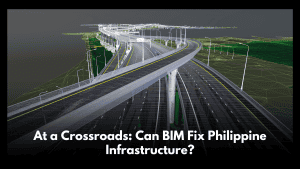
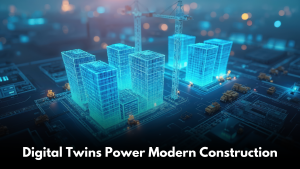
- Building Information Modeling (BIM): Produces digital project simulations that optimize energy efficiency and reduce material waste.
- Smart Sensors & IoT: Monitor water and energy consumption in real time, enabling buildings to self-regulate and sustain efficiency over time.
- AI & Predictive Analytics: Run scenarios that balance time, cost, and carbon footprint to help developers make efficient, environmentally responsible decisions.
These technologies are essential for achieving sustainability goals, as they directly support international funding requirements and government mandates.
Outlook
The Philippines is moving towards construction because of what the government is doing, what companies are doing, and what other countries are supporting. Though cities in the Philippines keep growing, these measures are very important to ensure the Philippines can grow without harming the environment. Sustainable construction is a part of this, and the Philippines is really working on it.