Across Asia, construction projects keep getting bigger and harder. Data centers, industrial plants, major infrastructure, and commercial developments now routinely involve more disciplines, more stakeholders, tighter timelines, and far more sophisticated building systems than a decade ago.
Data centers show the pattern clearly. Asia Pacific’s development pipeline stood at 19.4 GW, with roughly 3.7 GW already under construction, according to Cushman & Wakefield. Southeast Asia holds the largest share of that under-construction capacity, driven by markets such as Malaysia, Thailand, and Indonesia. The numbers matter, but they also point to a broader shift in how projects are designed and delivered.
Complexity changes the way teams have to work
Modern projects demand that architectural, structural, MEPF, specialist systems, sequencing, procurement, and operations all align with precision. A coordination miss in one area can ripple across the whole job. At the same time, teams face pressure to move faster while still protecting cost, quality, safety, and sustainability targets. When information lives only in disconnected drawings, spreadsheets, email chains, and ad-hoc meetings, keeping a clear view of the whole project becomes difficult.
The real problem is no longer a shortage of data. It is getting the right information to the right people at the moment they need it.
Digital delivery as a practical response
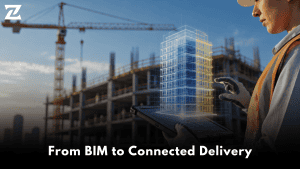
This is where Building Information Modeling (BIM), Virtual Design and Construction (VDC), and digital engineering start to earn their keep. BIM gives teams a structured digital model of the project so they can coordinate disciplines, catch clashes early, and improve constructability before anything reaches the site. VDC links that model to people, processes, schedules, and project goals, creating a more integrated way of planning and building. Digital engineering supports the technical coordination of complex systems, while Common Data Environments help keep information controlled and shared in one place.
None of this is about technology for its own sake. The point is better decisions and more reliable delivery.

From model coordination to connected construction
This, however, is not just about developing increasingly sophisticated models. This is about linking information throughout the project lifecycle. Coordination through models helps to identify potential problems at an early stage prior to actual construction work. Sequencing becomes possible thanks to 4D. 5D makes links between models, quantities, and costs. Verification is better structured via digital QA/QC.
This is especially true when the project gets bigger and more complicated. Within the data center industry, developers in Southeast Asia, in addition to increasing their capacity, have to meet higher expectations regarding power, water usage, sustainability, and impacts on local communities. Malaysia became one such example, with significant investment and developers paying closer attention to efficiency and operations.
Herein lies the rule: the more complex the project, the more its success depends on coordination.
The Opportunity for Asia’s construction industry
Digital instruments will not replace construction know-how. They can back it up. If teams can work from coordinated information, see problems earlier, communicate more clearly and decide with more confidence, then technology is a practical tool, not another layer of process.
The regional opportunity is larger than any one sector. It’s creating a more connected way of delivering projects. With increasing complexity of work, BIM, VDC and digital engineering help close the gap between design intent and what is actually built. Uniting people, processes and information in one shared digital environment.
The future of construction will not be measured by the quantity built. It will increasingly be judged by how well projects are planned, coordinated and delivered.